
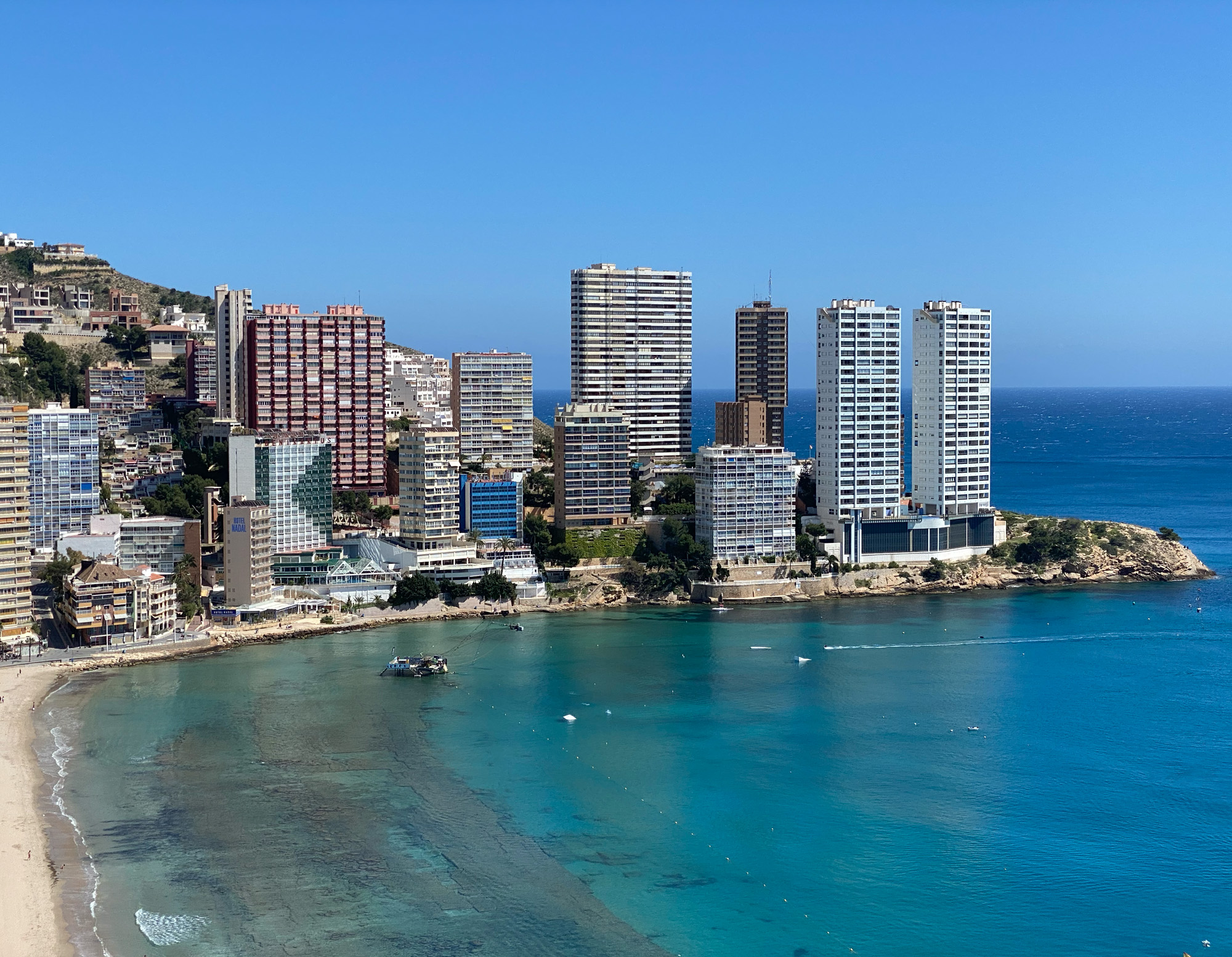
The Spanish residential property market has long since ceased to be purely national. Today it is one of the most international housing markets in Europe, where the structure of demand is shaped by buyers from many different parts of the continent. For a country with a well developed tourism economy and a high quality of life this is not a coincidence but the natural result of a long process during which Spain gradually became a major destination for European demand for homes by the sea. In recent years the share of foreign buyers within the overall structure of transactions has increased significantly. Whereas previously it fluctuated around ten percent of the market, today it remains consistently at around fifteen percent. In absolute terms this means that foreign buyers purchase tens of thousands of properties in Spain every year. The international buyer has therefore moved from being a niche participant to becoming an essential structural element of the market, influencing both the geography of demand and the dynamics of individual regions.
The core of this demand comes from European buyers, and the structure of their presence in the Spanish market has remained relatively stable. Historically the largest group continues to be British buyers, whose presence has developed over decades thanks to strong tourism ties and the tradition of spending a significant part of the year in a milder climate. Even after the United Kingdom left the European Union, British buyers continue to hold first place among foreigners in terms of the number of transactions. German buyers remain one of the most stable groups in the market, viewing property in Spain both as an investment and as a second home. French buyers are particularly visible in the north eastern part of the country due to geographical proximity and long standing cultural connections. In recent years the presence of buyers from the Benelux countries has also increased. Dutch and Belgian buyers are becoming increasingly active participants in the market, largely due to changes in European lifestyles and the growth of remote working which allows people to spend extended periods outside their country of residence. Italian buyers are also gradually strengthening their presence, seeing the Spanish market as an opportunity to diversify investments and acquire property in a country with stable international demand.
Particular attention should be given to the rapidly growing interest from Poland. In recent years the number of transactions involving Polish buyers has increased noticeably, reflecting both the country’s economic growth and the expansion of the European middle class that increasingly views overseas property as part of a long term financial strategy. A distinct group is formed by the countries of Northern Europe. Swedish, Norwegian, Danish and Finnish buyers have been present in the Spanish property market for many years. For residents of these countries Spain has traditionally been perceived as a place with a milder climate and longer daylight hours during the winter, while their higher income levels and stable social systems allow their citizens to acquire property outside their national markets.
The geography of foreign demand within Spain also follows a clear pattern. The most international areas remain the Mediterranean coastal regions and the island territories. The Valencian Community ranks first in terms of purchases by foreign buyers, followed by Andalusia and Catalonia. Looking at specific provinces, Alicante and Málaga show the highest concentration of international demand, together with the Balearic Islands and the Canary Islands, where in certain areas foreign buyers account for more than a quarter of all residential transactions.
The motivations for purchasing property in Spain may vary between nationalities. For some it is primarily an investment, for others the opportunity to own a second home by the sea, and for others a place for long term living or a future retirement destination. Statistics reflect these differences through the geography of transactions, the types of properties and price dynamics. However professional experience in the market reveals another aspect that rarely appears in official reports. Every day we speak with buyers from different European countries and hear directly from them why they decide to purchase property specifically here. The reasons may be expressed in different ways, but they almost always share the same underlying feeling. Spain is one of the rare places where different objectives of property ownership can converge in a single location. Here a purchase can simultaneously serve as an investment, provide a place for leisure and over time become a home for permanent living. It is precisely this combination of investment logic, quality of life and long term perspective that makes the Spanish property market so attractive for European buyers.
Sebastian Pereira, 2026
AICAT 8139


 Russian
  Spanish
  English
  Catalan
  French
  German
  Dutch
Dutch  Italian
  Latvian
  Ukrainian
  Norwegian
  Danish
  Finnish
  Swedish
  Polish